Kill The Shadow Strength, Spirit & Charm Explained
The three attributes that decide how Lucas investigates — not just what he finds.
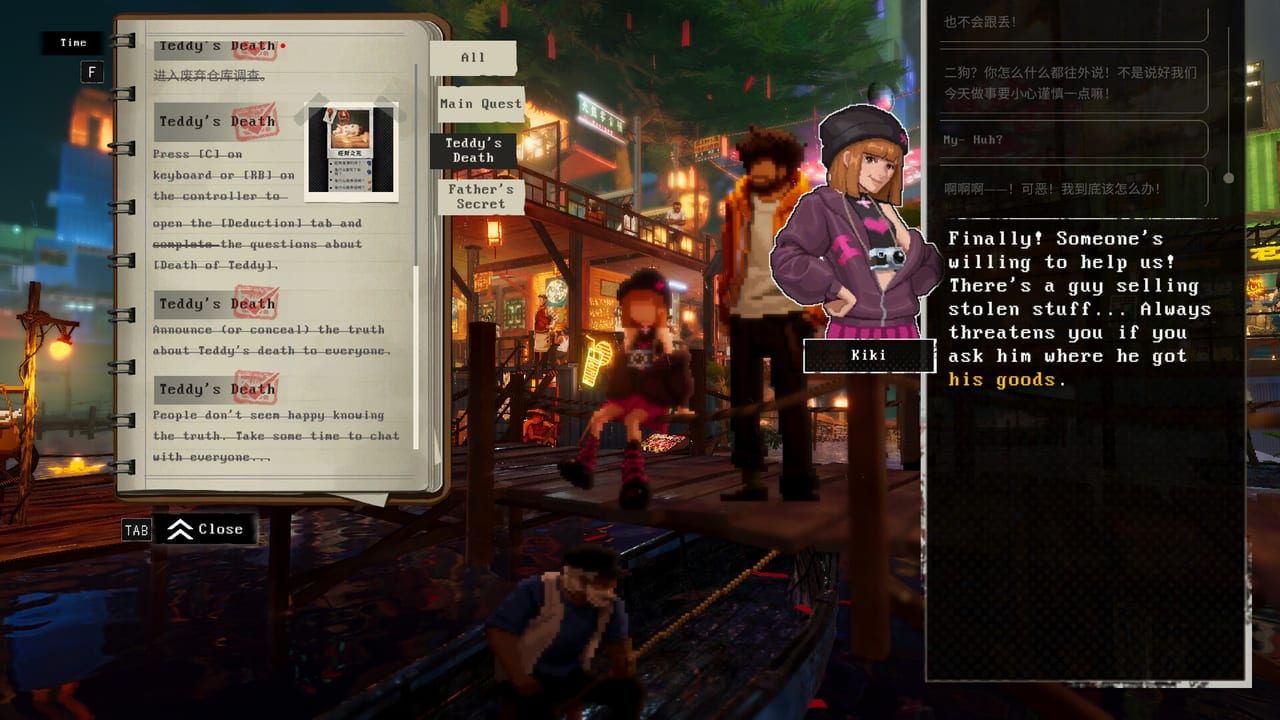
Lucas returns to Dark Tide City as a detective bound to the Shadow, a creature on his back that replays the last moments of the dead. Investigation begins with evidence — notes, objects, testimony — pinned to a corkboard where you link clues into working theories. Kill The Shadow’s RPG layer asks a second question: once the board is built, how does Lucas act? That answer comes from three attributes: Strength, Spirit, and Charm.
Strength represents physical pressure and force — breaking stalemates with intimidation, forcing access, or choosing confrontation when dialogue fails. Spirit covers psychological leverage — reading guilt, exploiting fear, and steering witnesses with manipulation rather than muscle. Charm handles persuasion, talk, and bribery-style approaches — smoothing tensions, buying cooperation, and navigating social hierarchies without drawing blood.
None of these stats replace deduction. They gate what Lucas can do after deduction. Two players with identical corkboards can accuse the same suspect yet reach different confessions, casualties, or public outcomes depending on which options their builds unlock.
How attributes meet the corkboard
Corkboard play is scene-agnostic: drag clues, test connections, and validate theories against Rewind reconstructions. When a theory solidifies, the game surfaces resolution routes — dialogue variants, environmental actions, and Shadow-assisted replays that confirm or challenge your line of reasoning.
Each route carries implicit stat checks. Strength routes might let Lucas shove past guards in the factory district or threaten waterfront enforcers at Shipwreck Wharf. Spirit routes expose contradictions during Rewind, press trauma buttons, or convince a witness they are already caught. Charm routes open wallets, flatter gatekeepers in Pig Cage Walled City, or talk down volatile suspects at Master Reed’s temple fair.
Under-spending in an attribute does not always block completion — but it often blocks the best outcome for that scene: full truth exposure, innocent protection, or achievement-grade endings tied to Teddy, Captain Theo, and broader district arcs.
Rewind and the Shadow’s role
Rewind lets the Shadow reconstruct death moments so Lucas observes timing, positions, and hidden actors. Spirit builds frequently gain extra interpretive prompts during Rewind — noticing micro-expressions or stress tells that other builds miss. Strength builds may unlock follow-up actions immediately after a Rewind sequence, capitalizing on shock. Charm builds sometimes receive social context overlays — who entered the scene with status to lose — that suggest non-violent next steps.
Treat Rewind as evidence confirmation, not a stat-free zone. The reconstruction informs the corkboard; your attributes decide which post-Rewind interrogation branches stay available when you return to living suspects.
District tendencies (not hard rules)
Dark Tide City spans distinct districts, each with a social texture that nudges — but never hard-locks — build value:
- Factory — industrial tension favors Strength for access and speed, though Spirit can turn workers against negligent managers.
- Shipwreck Wharf — grudge-laden cases reward Spirit for peeling motive layers; Strength clears dockside bullies blocking interviews.
- Pig Cage Walled City — cramped poverty makes Charm valuable for earning trust where authority symbols fail.
- Old Town — institutional cases mix all three stats; hybrid builds feel strongest here if points allow.
Case guides in the walkthrough hub map these districts to specific mysteries like Teddy, Master Reed’s fair, and wharf grudges.
Specialization versus hybrid builds
Specialists push one attribute early to hit high-tier scene options — ideal for achievement hunting or extreme endings. Hybrids split points to keep more dialogue branches open — ideal for first playthroughs when you want flexibility across districts.
The demo’s level cap punishes three-way spreading: a tri-hybrid Lucas often sees grayed-out options in critical scenes. A common opening is primary stat at seventy percent of points, secondary at thirty, then adjusting after Teddy or the factory introduction. Compare numbers in the build planner before locking in.
Deep stat tactics live in dedicated guides: Strength, Spirit, and Charm. Return to the builds hub for reading order and links to general guides.
Builds and multiple endings
Developers emphasize that story choices and build paths combine toward multiple endings. An attribute choice is still a choice — revealing Captain Theo’s secret publicly versus privately, taking money from a corpse versus leaving it, or beating a suspect versus framing guards all appear in demo achievement lists with different stat implications.
Document your build alongside major decisions so second playthroughs can chase missed branches. The full August 2026 release will likely expand case count; attribute planning now saves rerun time later.
Quick reference table
| Attribute | Core fantasy | Typical tools | Risk profile |
|---|---|---|---|
| Strength | Force and intimidation | Threats, physical access, hard confrontation | Raises heat; can close Charm routes |
| Spirit | Mind games and leverage | Fear, guilt, manipulation, Rewind reads | Can traumatize allies; moral gray endings |
| Charm | Talk and persuasion | Bribery, flattery, social bypass | Costs money; fails against hostile enforcers |
Use this table as a compass, not a script. Individual scenes flip expectations — especially in Old Town where titles matter more than muscle.
Frequently Asked Questions
Quick answers to the most common Kill The Shadow questions.
What is the difference between Spirit and Charm?
Spirit is psychological leverage — fear, guilt, and manipulation. Charm is social persuasion — talk, flattery, and bribery. Spirit breaks people inward; Charm wins cooperation outward.
Do I need all three attributes to finish the demo?
You can complete core case beats with a focused build, but optional branches and achievements often require secondary stat thresholds. Hybrids see more content per run.
When during a case do stat checks appear?
Most checks surface after corkboard theories validate — during interrogations, confrontations, and post-Rewind decisions. Some exploration gates also require minimum Strength or Charm.
Does the Shadow have its own stats?
Lucas carries the RPG attributes. The Shadow enables Rewind and commentary, but build points apply to Lucas's investigative approaches.
Where should I allocate points for Teddy and Captain Theo?
Teddy's case mixes social and authority pressure. Charm helps with bystanders; Strength or Spirit can force answers from reluctant officials. See the Teddy walkthrough for scene-specific thresholds.